


Enterprise network architectures have become increasingly complex, and the risks to these networks grow exponentially by the year. Atop these challenges, cybercriminals are always trying to find and exploit new vulnerabilities through a variety of evolving methods. Generally, network vulnerabilities exist across of an array areas, including devices, data, applications, employees and locations. To mitigate these vulnerabilities, organizations employ many different network security tools and systems.
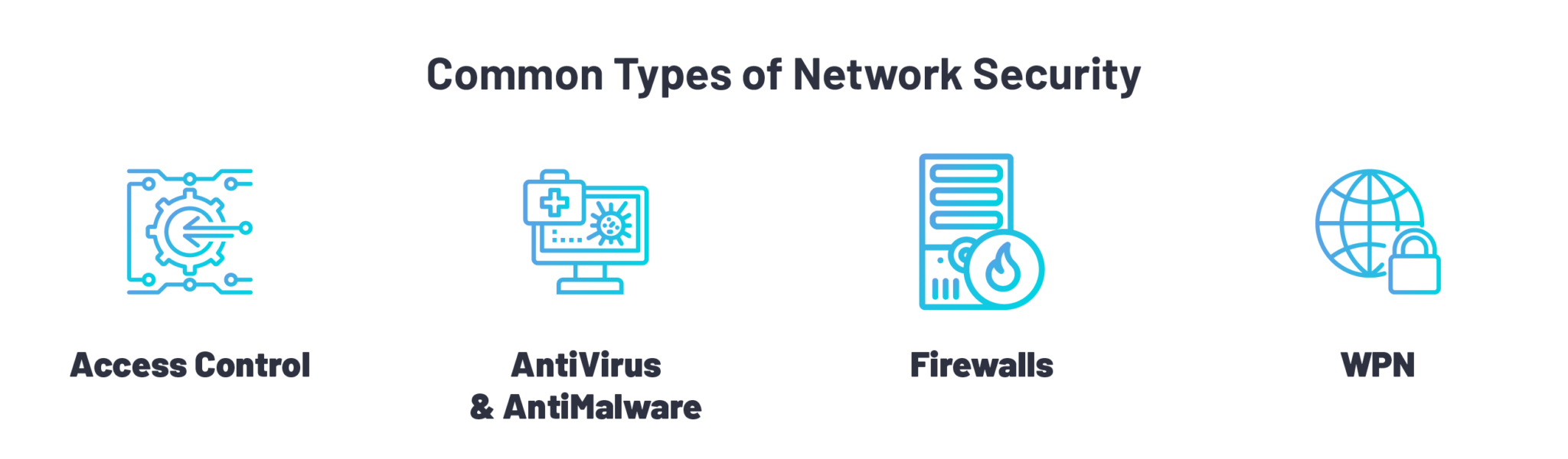
Network Access Control – To prevent the infiltration of corporate networks, many organization utilize comprehensive access control policies that dictate how employees, contractors and guests can access the network. The use cases for network access control continue to grow. IT security teams rely on NAC for network visibility, the discovery of endpoints, security profiling, compliance enforcement, remediation, and more.
Antivirus & Antimalware Software – Antivirus and antimalware software protect an organization from a variety of malicious software like viruses, ransomware and beyond. The best software not only scans files upon entry to the network but continuously scans and tracks files as they move across devices.
Firewall Protection – Firewalls act as a wall between unknown external networks and trusted internal networks and resources. IT administrators leverage firewalls to define a set of rules that blocks or permits traffic onto the network. Firewalls scan packets for malicious code or attack vectors that have already been identified as established threats.
Virtual Private Networks – Virtual private networks (VPNs) create a connection to the network from another endpoint or site. For example, users working from home would typically connect to the organization’s network over a VPN. Data between the two points is encrypted and the user would need to authenticate to allow communication between their device and the network.
As corporate networks expand, so too do the vulnerabilities and risks of breach to those networks. Whether it’s risk of embarrassment, risk of brand sentiment, or risk of revenue loss, companies today are motivated, yet challenged to secure their networks. As we’ve discussed, network security comes in many forms. The reasons for why network security is important are equally as diverse.
In this day and age, data is the most valuable asset that companies maintain. Whether this data is confidential financial information, a list of your customers, or the addresses of your employees, it’s critical that any importance is managed and secured. To do so requires taking proactive network security steps like data backups, multi-factor authentication (MFA), password policies and more.
Not all data being stored across your networks “belongs” to your organization. This is particularly true for consumer-facing businesses, like those in e-commerce, healthcare, transportation, hospitality and beyond. These days, it seems like not a day goes by without a major headline regarding a data breach and subsequent leak on the dark web in which one of these companies is the victim. In these scenarios, everyone loses. Corporations lose customers over trust, in turn losing revenue, and customers face potential risk of their personal data being used maliciously against them.
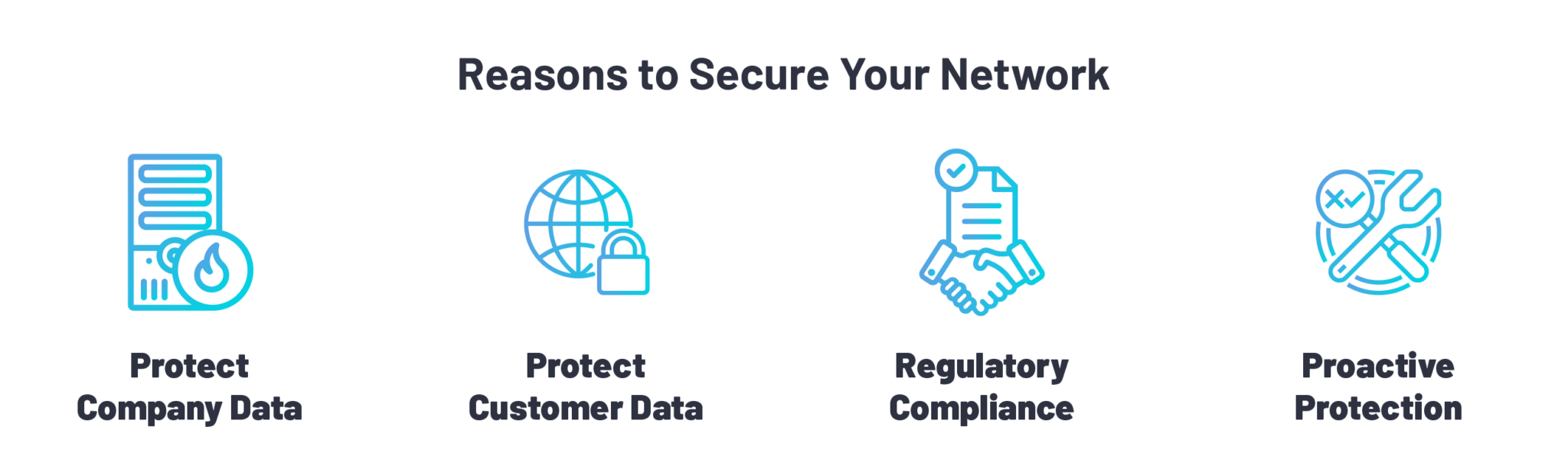
As regulations like SOX, HIPAA, PCI-DSS, GLBA and others enter the healthcare, finance, retail and government industries in full force, enterprises find themselves moving quickly to bring their networks into compliance. Compliance, however, doesn’t just refer to adhering to security policies; compliance is now more about adhering to industry standards and regulations, while ensuring that an organization can easily audit and assess their level of compliance.
Most ransomware attacks manipulate a patch or anti-virus vulnerability that allows hackers to gain unauthorized access to sensitive company information. In the unfortunate case that your organization has been attacked, it’s imperative to be able to update patches and remotely disconnect endpoints from the network to prevent the lateral spread of the attack across the organization.
While there are many types of network security tools that serve various needs for IT teams, network access control (NAC) solutions make up an absolutely integral part of any network security stack. Put simply, NAC solutions seek to do exactly what their name suggests – control access to the network through a series of internally-defined policies, enforcing those policies to maintain compliance – both for the network and the devices attempting to connect to them.
Today, network access control covers a growing array of use cases when it comes to network security. In general, there are several important reasons for companies to employ NAC, including: