
Enterprise networks no longer operate within a defined perimeter. Remote users, cloud applications, distributed offices, and unmanaged devices have fundamentally changed how organizations approach network security.
SASE solutions provide a cloud-delivered framework for secure access by converging networking and security into a unified architecture. Portnox strengthens SASE strategies by delivering cloud-native zero trust access and unified access control across users and devices.


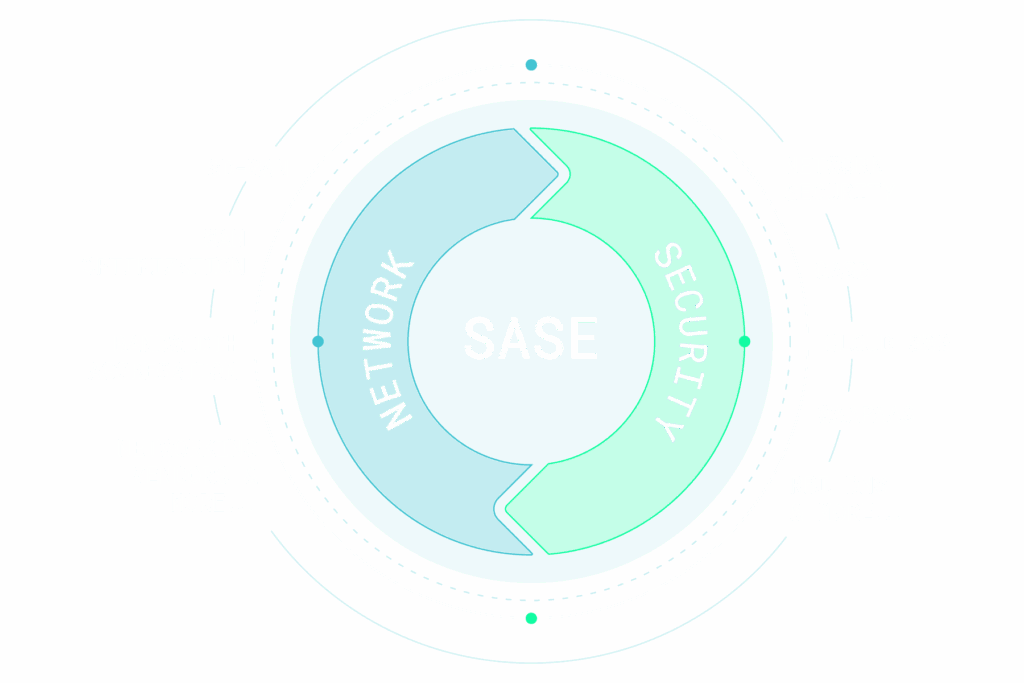
Secure Access Service Edge (SASE) is a cloud-based architecture that converges networking and security services into a unified framework.
Rather than relying on separate point solutions, SASE architectures combine:
Zero trust principles serve as the policy foundation within modern SASE architectures, enforcing identity-based access decisions instead of location-based trust.

A modern SASE architecture brings together multiple security functions, but it must be anchored by strong identity and access control.
Common components include secure web access, cloud-delivered security services, and ZTNA. However, these functions are only effective when unified access control (UAC) enforces consistent policy across users and devices.
Without centralized identity-based policy enforcement, SASE architectures risk becoming fragmented collections of cloud security tools rather than a cohesive security solution.

The shift toward SASE is driven by structural changes in enterprise IT. Workforces are distributed. Applications are cloud-based. Users and devices connect from anywhere.
Traditional perimeter security and VPN-centric models struggle to keep up. They assume trust based on network location and extend broad access once connected.
SASE represents an architectural shift, not a single product. It replaces static perimeter defenses with cloud-based policy enforcement that follows users and devices wherever they operate.
Key adoption drivers include:

Enterprises choose Portnox because it strengthens the access layer of their SASE architecture without attempting to replace the entire SASE platform.
Key advantages include:
Portnox acts as a specialized access control layer within SASE frameworks, delivering cloud-native NAC and ZTNA capabilities that integrate seamlessly into broader SASE architectures.
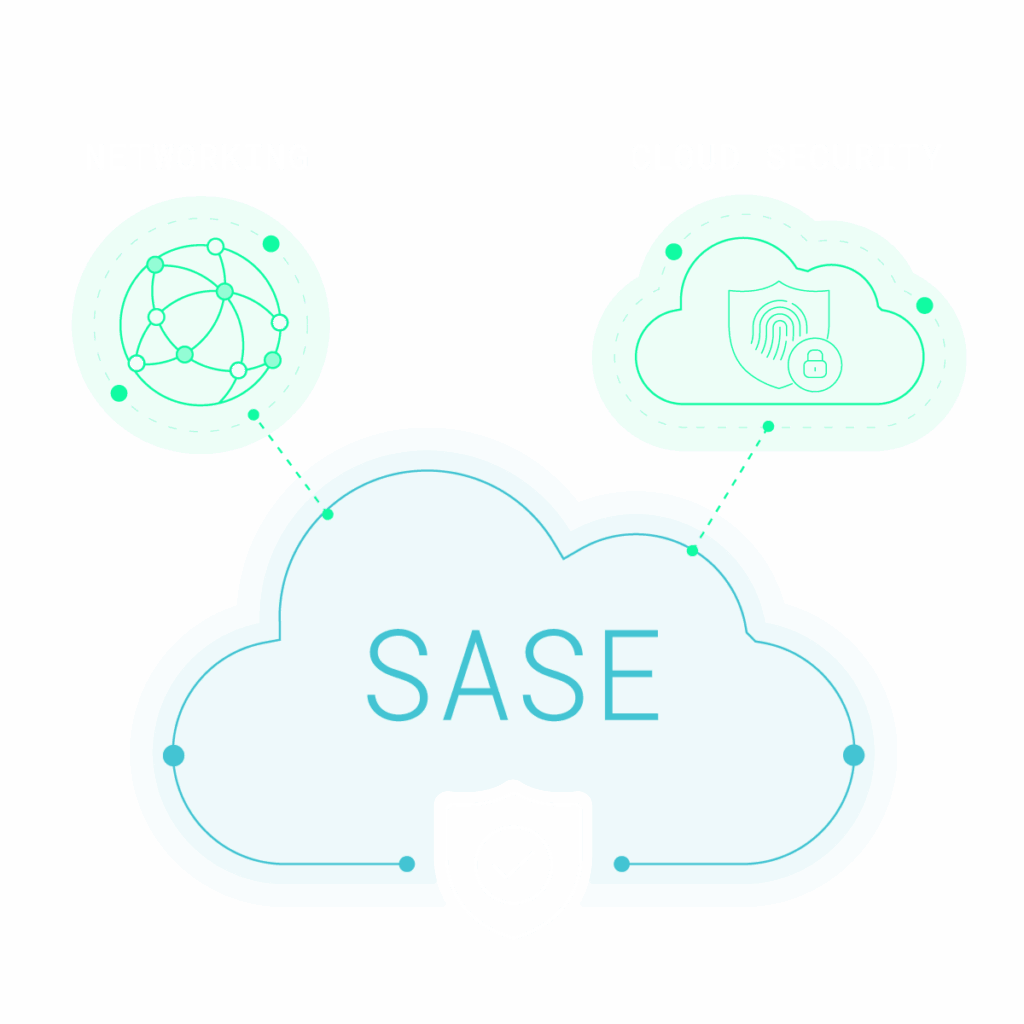
SASE architectures centralize policy enforcement across cloud and network environments, improving governance and audit visibility.
When identity-based access decisions drive secure connectivity, organizations gain:
Portnox contributes to compliance objectives by enabling granular access control, centralized logging, and audit-ready reporting aligned with regulatory frameworks such as NIST 800-53, ISO 27001, HIPAA, and PCI DSS.
Portnox is not a full SASE platform. Instead, it delivers the critical access control layer within modern SASE architectures. Through cloud-native zero trust network access, Portnox enables:
Unmanaged devices are often the weakest link in SASE strategies. Contractors, remote users, IoT systems, and personal devices frequently fall outside traditional device management controls. Portnox extends secure access to these environments through agentless, cloud-native policy enforcement, ensuring SASE architectures protect all endpoints, not just managed corporate assets.
Staying ahead in IT means strengthening cybersecurity—and zero trust architectures now lead the charge. But let’s face it: embracing zero trust can feel daunting. With so many tools and complexities, it’s easy to lose your way.
To understand how organizations navigate zero trust, Portnox teamed up with TechTarget. We surveyed hundreds of IT and cybersecurity professionals across North America. Discover the insights we uncovered in our Trends in Zero Trust report.
Secure Access Service Edge (SASE)
Secure Access Service Edge (SASE) is a cloud-delivered architecture that combines networking and security services to provide secure access for users and devices. It integrates zero trust principles to enforce consistent, identity-based policy across distributed and cloud-first environments.
SASE solutions improve secure access by verifying user identity and device posture before granting access to applications and network resources. They centralize policy enforcement across remote users, branch offices, and cloud applications to reduce unauthorized access risk.
Zero trust provides the policy framework within SASE architectures. It enforces continuous verification, least-privilege access, and identity-based decision-making to prevent lateral movement and limit exposure across hybrid and cloud environments.
Traditional VPNs grant broad network access once a connection is established. SASE applies identity-driven policy enforcement before granting application access, reducing attack surface and improving security for distributed and remote users.
SASE is typically delivered as a cloud-native service that converges networking and security capabilities through distributed cloud enforcement points. It enables organizations to provide scalable, secure connectivity without relying on centralized, hardware-based infrastructure.
SASE solutions support remote and hybrid work by delivering secure access through distributed cloud enforcement points. They verify user identity and device trust before granting access to corporate and cloud applications.
Portnox fits into a SASE architecture as a cloud-native zero trust access layer. It provides unified access control, certificate-based authentication, and secure policy enforcement for users and devices within broader SASE frameworks.
After completing the form, an email will be sent to you with the report download link.